The UEFA Champions League final has always been football’s biggest club event. But this year, UEFA is making one of the most significant scheduling changes in the modern history of the competition.
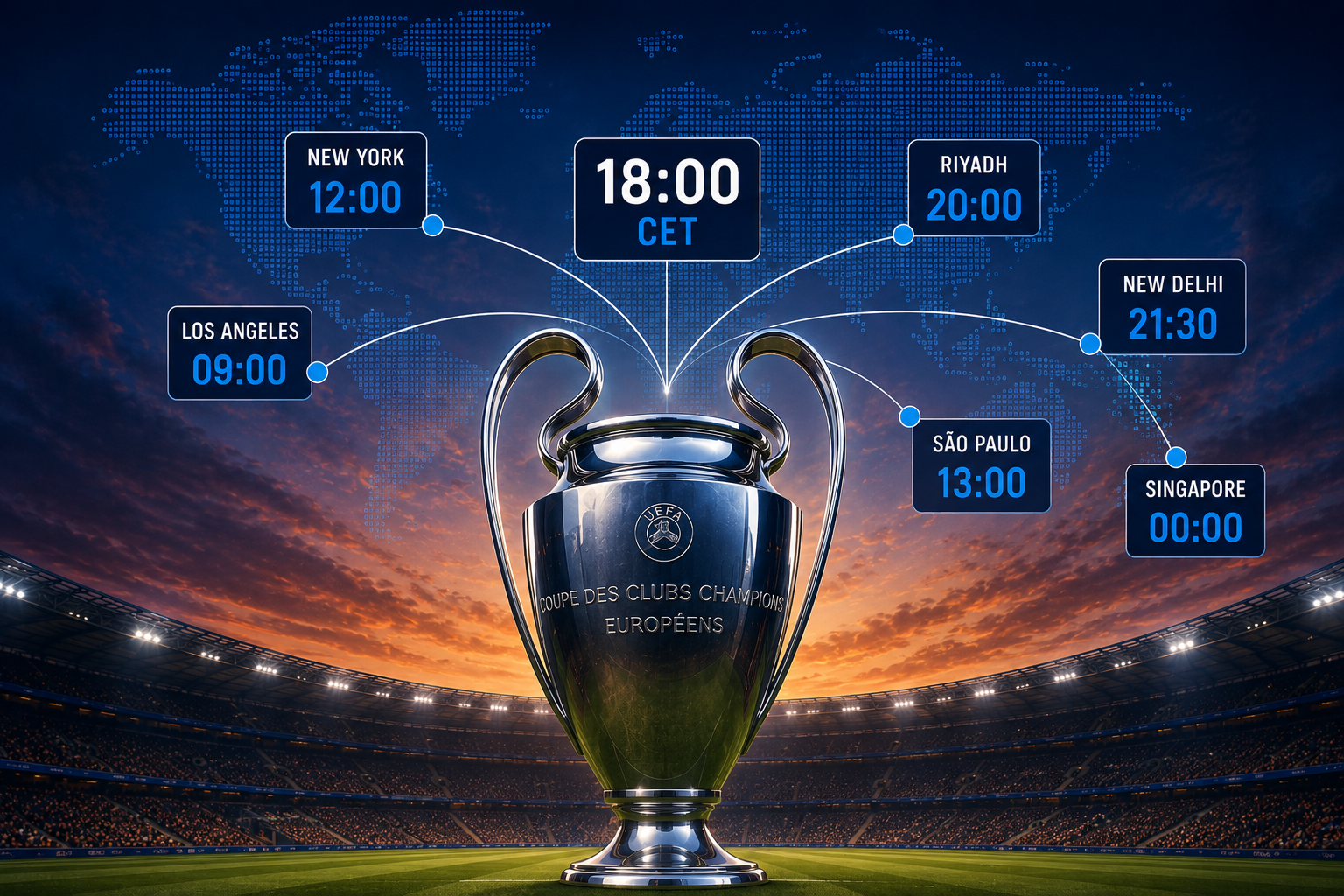
For the first time in decades, the final will kick off at 18:00 CET instead of the traditional 21:00 slot.
At first glance, it may seem like a simple logistical adjustment. In reality, it reflects a much bigger shift in how global sports audiences consume live football.
The Champions League Final Has Become a Truly Global Media Event
The Champions League final is no longer just a European television product.
UEFA estimates recent finals have reached around 145-150 million live viewers worldwide, while total global reach across all media touchpoints approaches 450 million people.
The growth has been driven by several factors:
- streaming expansion
- mobile viewing
- international rights deals
- social media distribution
- increasing interest in European football outside Europe
While Europe remains the core market, some of the strongest audience growth has come from:
- North America
- Latin America
- the Middle East
- India and Southeast Asia
These regions increasingly consume the Champions League through streaming platforms rather than traditional linear television.
That shift matters because global audience growth changes how UEFA thinks about scheduling.
Why UEFA Changed the Kick-Off Time
UEFA says the move to an 18:00 CET kick-off is designed to improve the “overall matchday experience” for fans, teams, and host cities.
The official reasoning includes:
- easier transport logistics
- more family-friendly viewing
- safer travel conditions after the game
- longer post-match activity for host cities
- broader accessibility for younger audiences
But there is also a clear global broadcasting strategy behind the decision.
An earlier kick-off dramatically improves viewing accessibility across major international markets.
Which Time Zones Benefit Most?
The traditional 21:00 CET kick-off worked well for Europe, but it created difficult viewing windows elsewhere.
The new 18:00 CET slot shifts the global viewing curve significantly.
Europe
- UK: 17:00
- Central Europe: 18:00
- Eastern Europe: 19:00
The final becomes more family-accessible and finishes earlier, particularly if extra time and penalties are involved.
North America
- New York: 12:00
- Los Angeles: 09:00
This is arguably the biggest strategic improvement.
Under the old schedule, the match started at 3pm on the US East Coast and noon on the West Coast. The new timing creates a far stronger daytime sports window for North American broadcasters and streaming platforms.
Given UEFA’s increasing commercial focus on the US market, this is unlikely to be accidental.
Latin America
- Brazil: 13:00
- Argentina: 13:00
- Mexico City: 10:00
Football audiences in Latin America are already massive, but earlier scheduling improves accessibility for younger viewers and weekend viewing habits.
Middle East
- Saudi Arabia: 20:00
- UAE: 21:00
This may actually be the most balanced region under the new model. Prime-time evening viewing remains intact without pushing the match too late into the night.
Asia
- India: 21:30
- Singapore/Hong Kong: 00:00
- Tokyo: 01:00
Asia remains challenging, but the earlier kick-off slightly improves accessibility compared to the previous schedule, which pushed matches even deeper into overnight hours.
The Streaming Era Is Reshaping Football Scheduling
Historically, Champions League scheduling prioritised European television broadcasters.
That model is changing.
Today, UEFA operates in a fragmented streaming ecosystem where audiences watch matches across:
- subscription streaming services
- mobile apps
- social platforms
- connected TVs
- regional sports platforms
Global audience optimization matters more than ever.
Earlier kick-off times help broadcasters maximise:
- total reachable audience
- family co-viewing
- mobile engagement
- advertiser value
- post-match digital interaction
This is especially important as sports rights become increasingly expensive and broadcasters fight harder for subscriber retention.
The Bigger Picture: Football Is Becoming a Global Always-On Product
The 18:00 final is not just a scheduling tweak.
It signals how football’s biggest competitions are adapting to a world where the audience is no longer concentrated in Europe alone.
The Champions League final is now a global streaming event as much as a football match.
And as international viewing continues to grow, scheduling decisions will increasingly be driven by worldwide accessibility rather than traditional European television habits.
For sports platforms, broadcasters, and streaming services, that creates a new challenge:
helping users discover where and how they can actually watch the game.
As rights fragmentation accelerates, broadcast discovery is becoming a critical layer in the sports viewing experience.