
A Sports Bar Runs Three Schedules on Matchday. It Only Needs One.
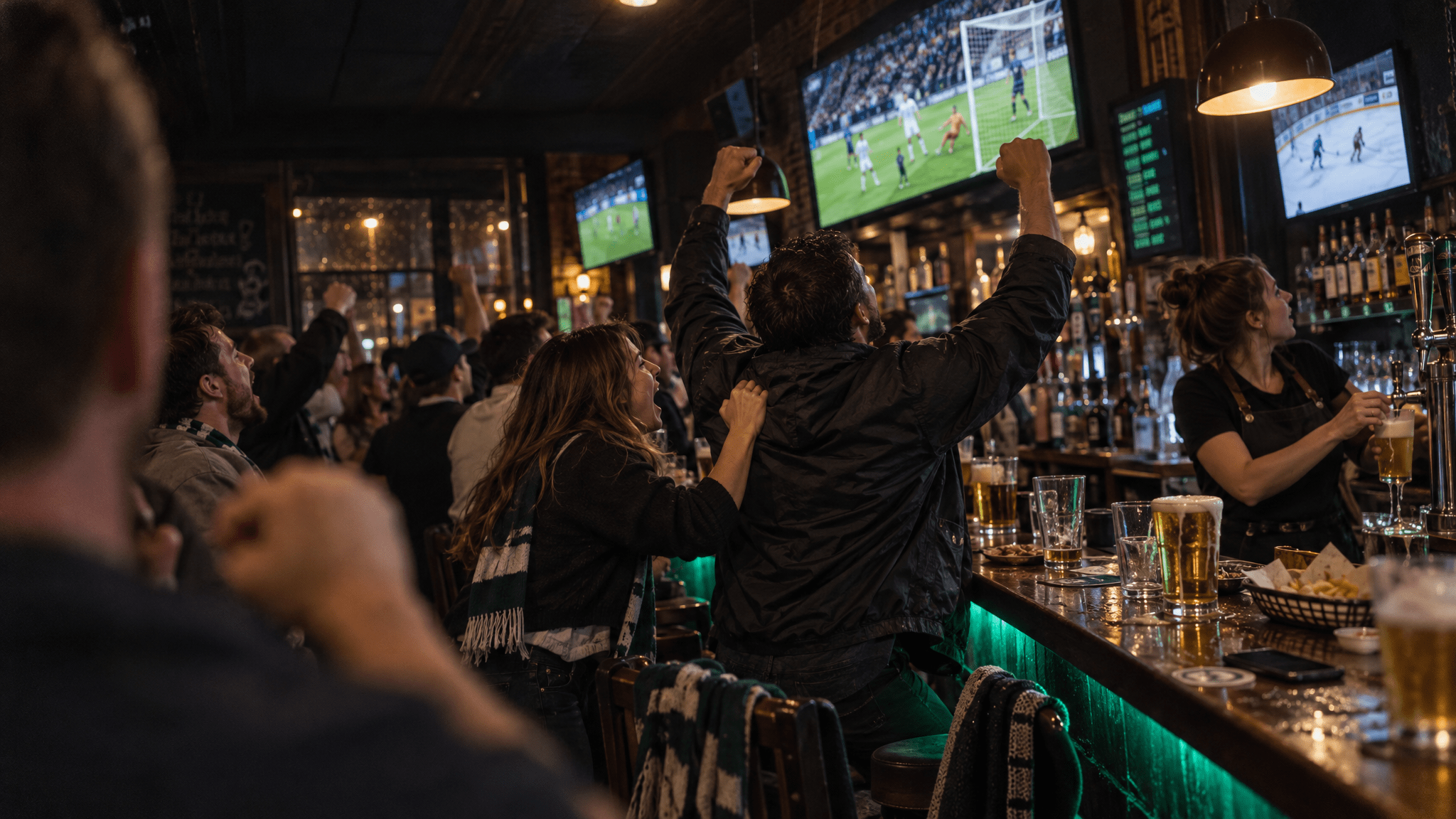
Ask anyone who has run a busy sports bar on a big night, and they will tell you the hardest part is not the crowd. It is the schedule.
On a typical matchday, a venue that shows live sport keeps three versions of the same plan. One for staff: which game goes on which screen, from which channel, at what time. One for guests: the website, the social posts and the booking page that tell people what is on tonight. And one inside the venue: the board, the screen or the chalk sign that says what is coming next.
Three schedules, usually maintained by hand, by different people, from different sources. When a kickoff moves or a game turns out to be on a different service, at least one of them is wrong.
Here is what the same matchday looks like when all three run on one schedule.
Morning: the plan
The manager opens the complete local broadcast schedule for the day: every relevant game, the correct local start time, and the TV channel or streaming service carrying it. Ronin maintains that schedule for the venue's market, so nobody has to cross-check league sites against TV guides.
From there, the venue makes its own choices. The big league game goes on the main screen. The late European match takes the main screen after it. A local ice hockey game runs on the side screens for the regulars who come for it. Each game gets a screen assignment, and the running order is set once.
The outcome is a plan every shift can work from. The evening bartender sees the same running order the manager made in the morning, with the channel already listed, not a note that says "check what it is on".
Afternoon: the guests
The same decisions become the guest-facing schedule. A branded widget on the website or app shows exactly which games the venue intends to show, with times, and a direct route to book a table.
This is the moment that fills seats. Fans decide where to watch a game in the hours before it starts, and they decide based on whether they trust the venue will actually have it on. A schedule that only lists the games the venue has chosen answers that question precisely. It is also easy to share for the week ahead.
Because the widget runs on the venue's own selection, there is no second list to keep in sync. Change the plan in the morning, and the website changes with it.
Evening: the room
Inside the venue, the same schedule drives the lobby and bar screens: the next kickoff, which screen it is on and which channel it comes from. Guests who came for the first game can see what is on next and plan the rest of their visit around it.
That is the point where one game becomes two, and one drink becomes dinner.
One source, three jobs
The concept is simple, and it is the same in every market:
- Ronin maintains the local viewing schedule. Start times, channels and streaming services stay current for the market the venue operates in.
- Each venue selects the games it plans to show. The schedule only contains what the venue intends to put on.
- Guests find the right game at the right location. The same decision works on the website, in the venue and for the team on shift.
For a single venue, that means less manual schedule work. For a group with many locations, it means each venue runs its own local programme from one consistent source, with one fan journey across all of them.
The recommended setup
Most venue operators combine two parts:
- Sports viewing data (API) for planning and internal systems: the complete local schedule for screens, channels and staff.
- The Widget Builder for guests: a branded schedule for the website, the app and the screens in the venue.
Before the busiest weeks of the year
The holiday season packs more live sport into fewer days than any other stretch of the calendar, and that is exactly when three hand-kept schedules fall out of step. It is a good time to see one schedule doing all three jobs.
We will configure a pilot around your venue, your market and your brand, and the first two months are on us.